Introduction
Imagine this: an AI that adapts to your every preference, a virtual companion that learns from your nuanced feedback. This isn't science fiction, it's the potential of Reinforcement Learning from Human Feedback (RLHF).
Think of it like training a particularly intelligent puppy. Instead of explicit commands, you guide its development with positive reinforcement – a pat for fetching the ball, a gentle nudge away from chewing your shoes. RLHF adopts this approach, allowing AI to learn by directly responding to your preferences, whether it's crafting a witty story, suggesting the perfect movie, or even navigating a maze with agility.
The Learning Loop
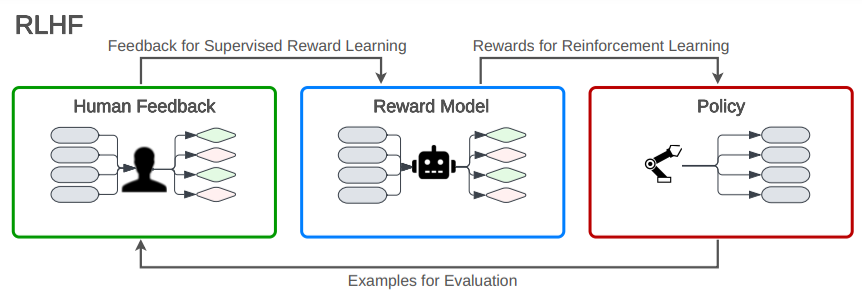
The AI Takes a Guess: It might generate a creative text format, recommend a product, or navigate a virtual environment.
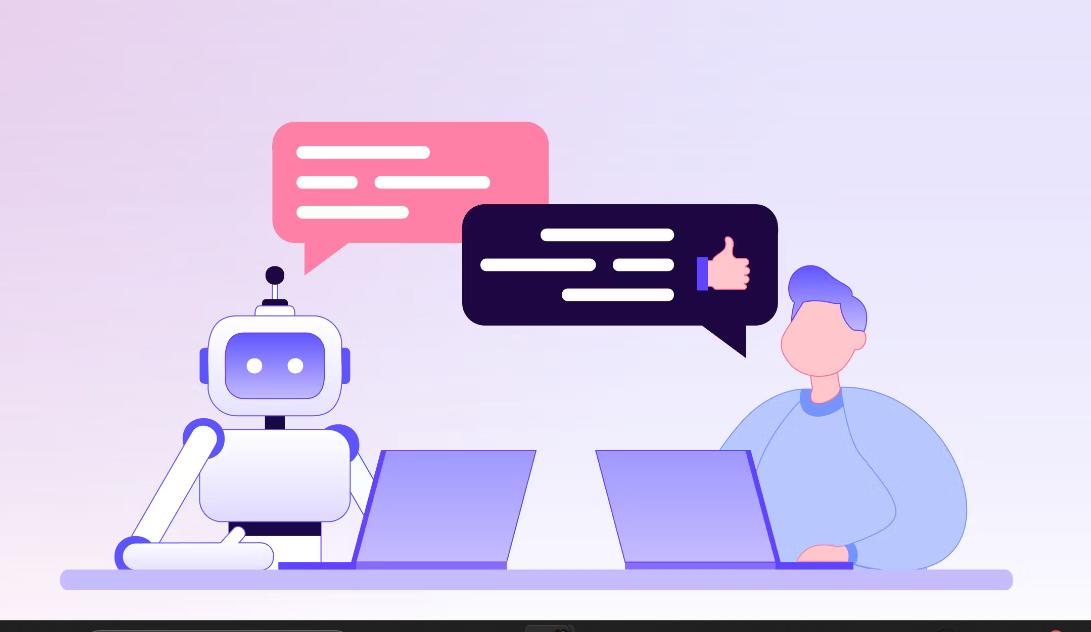
Your Feedback Shapes Its Path: You provide the crucial guidance – a thumbs up for the hilarious story, a thumbs down for the overly dramatic film, or subtle corrections for its movements.
The AI Adapts and Improves: It analyzes your feedback, learning what resonates with you and adjusting its future actions accordingly.
Unlocking the Potential
Personalized AI Experiences: Imagine chatbots that understand your humor, recommenders that know your taste in music, or robots that move seamlessly around you, anticipating your needs. RLHF can make it a reality.
Beyond Predefined Rules: Forget rigid programming. RLHF allows AI to learn what works best for you by directly responding to your preferences, opening doors to creative solutions and unexpected benefits.
Challenges and Considerations
The Time Investment: Like any good training, providing effective feedback takes time and effort. But remember, the more you invest, the better your AI companion becomes.
Feedback Nuances: Misinterpretations can happen. Careful and clear feedback is crucial to ensure the AI learns the right lessons.
RLHF vs. Unsupervised Learning
While both RLHF and unsupervised learning aim to train AI models, they take different approaches with distinct advantages and limitations. Here's a breakdown of their key differences:
Data Usage
Unsupervised learning: Uses unlabeled data, meaning the data doesn't have pre-defined categories or outcomes. The model must discover patterns and relationships on its own.
RLHF: Combines unlabeled data with human feedback. The model learns from the unlabeled data to generate outputs, then receives feedback from humans to shape its behavior.
Learning Process
Unsupervised learning: Identifies hidden structures and patterns in the data to group it into meaningful categories, perform dimensionality reduction, or generate creative outputs.
RLHF: Focuses on achieving a desired outcome, guided by human feedback. The model learns through trial and error, adjusting its actions based on the feedback received.
Human Involvement
Unsupervised learning: Requires minimal human intervention after data preparation. The model learns independently from the data.
RLHF: Requires active human involvement to provide feedback on the model's outputs. The quality and quantity of feedback directly impact the model's performance.
Applications
Unsupervised learning: Used for tasks like clustering (grouping similar data points), dimensionality reduction (compressing data), and anomaly detection (finding unusual patterns).
RLHF: Used for tasks where defining clear success metrics is difficult, like creative writing, personalized recommendations, or robot control in dynamic environments.
Key Differences
Feature | Unsupervised Learning | RLHF |
|---|---|---|
Data | Unlabeled | Unlabeled + Human Feedback |
Learning process | Discovers patterns | Learns by trial and error |
Human involvement | Minimal | Active |
Applications | Identifying hidden structures, generating creative outputs | Personalized tasks, adapting to changing environments |